

Spaying and neutering can prevent unplanned pregnancies while reducing the risk of certain reproductive health problems in dogs and cats. At Mills Animal Hospital, we provide cat and dog spay and neuter in Marietta, GA, with recommendations tailored to your pet’s age, breed, size, health, and lifestyle.
The best time to spay or neuter is not the same for every pet. Our veterinarian will help you weigh the benefits, discuss appropriate timing, and explain what to expect before and after surgery.
Ready to schedule your pet’s spay or neuter? Call (770) 988-6698 or request an appointment online.
What Are the Benefits of Spaying or Neutering Your Dog or Cat?
Spaying and neutering prevent unwanted litters and may reduce the risk of several reproductive health problems. The specific benefits differ between female and male pets.
For female dogs and cats, spaying may:
- Prevent uterine infections such as pyometra
- Eliminate the risk of ovarian and uterine cancers
- Reduce the risk of mammary tumors when performed at an appropriate time
- Eliminate future heat cycles
- Prevent pregnancy and complications related to giving birth
For male dogs and cats, neutering may:
- Eliminate the risk of testicular cancer
- Reduce the likelihood of certain prostate conditions
- Decrease roaming in some pets
- Reduce urine marking or mounting
- Prevent unwanted litters
Spaying and neutering may also reduce certain hormone-driven behaviors, but they do not guarantee that every behavioral concern will disappear. Your veterinarian can help you weigh the benefits and recommend timing based on your pet’s age, breed, size, and health.
Will Spaying or Neutering Change My Pet’s Personality?
Spaying or neutering should not change the basic personality of your dog or cat. A playful pet should still be playful, and an affectionate pet should still seek out attention.
You may notice a decrease in behaviors driven by reproductive hormones, including roaming, mounting, urine marking, or vocalization associated with heat cycles.
Some pets may also experience changes in metabolism after surgery. Your veterinarian can help you adjust feeding or exercise if needed to support a healthy body weight.
What Is Recovery Like
After a Cat or Dog Spay or Neuter?
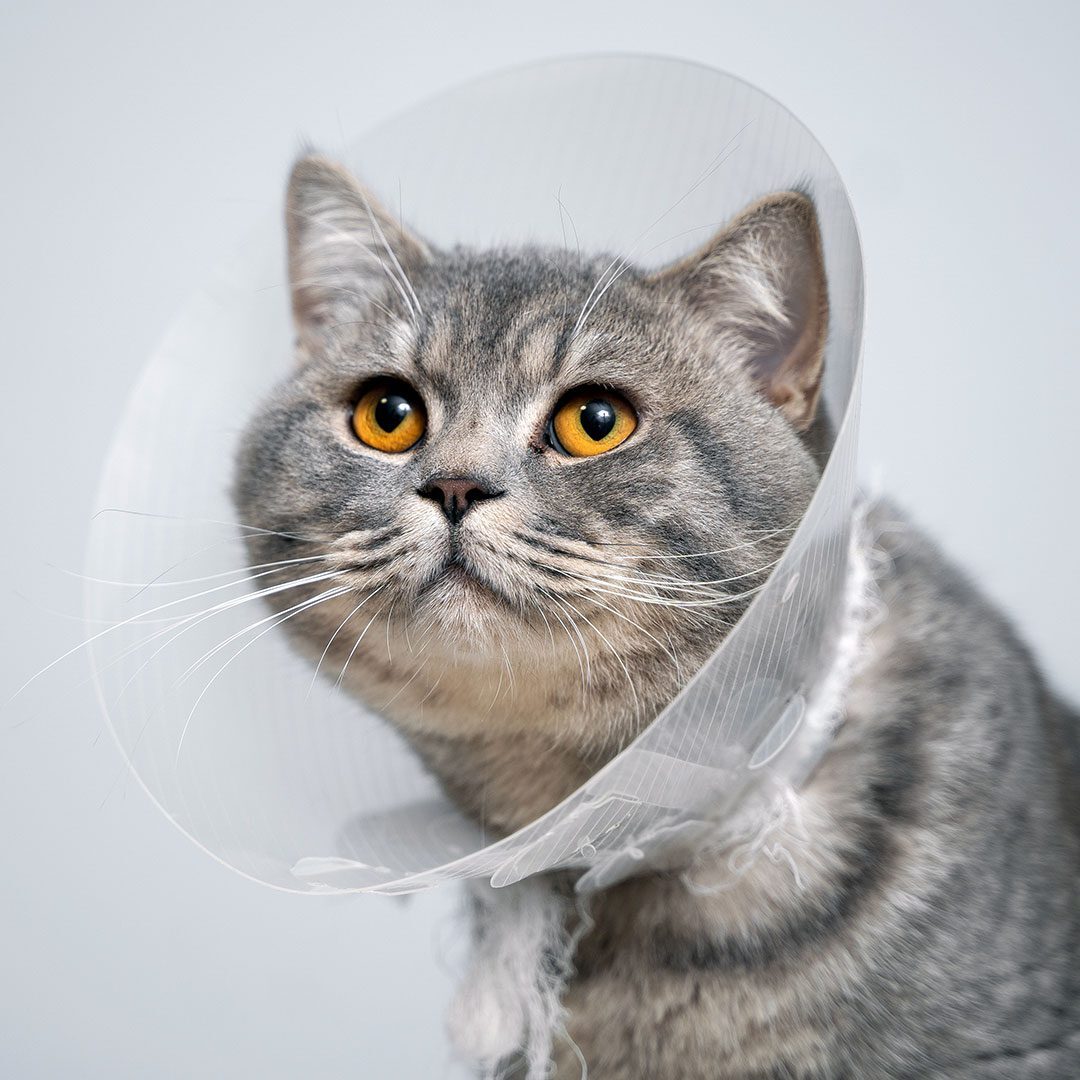
Most dogs and cats need approximately 10 to 14 days for the surgical incision to heal.
During this period, activity should be limited to reduce strain on the incision. Your pet should generally avoid:
- Running and jumping
- Rough play
- Swimming or bathing
- Licking or chewing the incision
- Other strenuous activity
Your pet may need to wear an Elizabethan collar or surgical recovery suit to prevent access to the incision.
Check the surgical area regularly and contact your veterinarian if you notice increasing redness, swelling, discharge, bleeding, opening of the incision, or other changes that concern you.
If you have questions during recovery, give us a call at (770) 988-6698 so our veterinary team can advise you based on your pet’s procedure and symptoms.
Frequently Asked Questions About Cat & Dog Spay & Neuter
There is not one age when a dog or cat automatically becomes too old to be spayed or neutered. Healthy adult and senior pets may still be candidates for surgery, but age, medical history, current health, and anesthesia risk all need to be considered. Our veterinarian can perform an exam and recommend pre-surgical testing to determine whether spaying or neutering is a safe choice for your pet.
Most dogs and cats need about 10 to 14 days for the surgical incision to heal after a spay or neuter procedure. During this time, pets should avoid running, jumping, rough play, swimming, and other activities that could strain the incision. Our veterinarian will provide specific recovery instructions based on your pet’s procedure and individual needs.
Dogs and cats typically need to wear an Elizabethan collar (cone) or surgical recovery suit for about 10 to 14 days after spay or neuter surgery. Both help prevent your pet from licking or chewing at the incision, which can cause irritation, infection, or reopening of the surgical site. Keep the cone or surgical suit on until the incision has healed and your veterinarian says it is safe to remove.
We typically do not recommend spaying a pet while they are in heat unless it is an emergency. For dogs, we generally recommend waiting until the heat cycle has ended and approximately six weeks after bleeding has stopped before considering spay surgery. Waiting allows increased blood flow to the reproductive organs to decrease, which can help reduce the risk of complications during surgery. Your veterinarian can help determine the safest time to schedule your pet’s procedure.