
Bad breath may be the first sign you notice, but dental problems can develop long before they become obvious at home. Plaque and tartar can build up around and below the gumline, leading to inflammation, infection, discomfort, and damaged teeth.
At Mills Animal Hospital in Marietta, GA, we offer professional cat and dog teeth cleaning services to help maintain their oral health and prevent dental issues before they arise. Our veterinary team evaluates your pet’s teeth and gums, performs professional cleanings under anesthesia, uses dental X-rays to look below the gumline, and treats problems we find along the way.
Ready to schedule a dental exam for your pet? Contact us today at (770) 988-6698 or book your appointment online!
Why Do Cats and Dogs Need Professional Teeth Cleaning?
Plaque begins forming on your pet’s teeth every day. If it is not removed, it can harden into tartar and contribute to gingivitis and periodontal disease. Much of this disease develops beneath the gumline, where it cannot be seen during a quick look inside the mouth.
Professional veterinary dental care allows us to thoroughly examine and clean areas that brushing and dental chews cannot reach.
Cat and dog teeth cleaning procedures may help:
- Remove plaque and tartar above and below the gumline
- Reduce inflammation associated with dental disease
- Identify damaged, loose, fractured, or infected teeth
- Detect changes below the gumline with dental X-rays
- Address sources of oral pain and infection
- Protect healthy teeth from progressing dental disease
- Improve persistent bad breath caused by oral disease
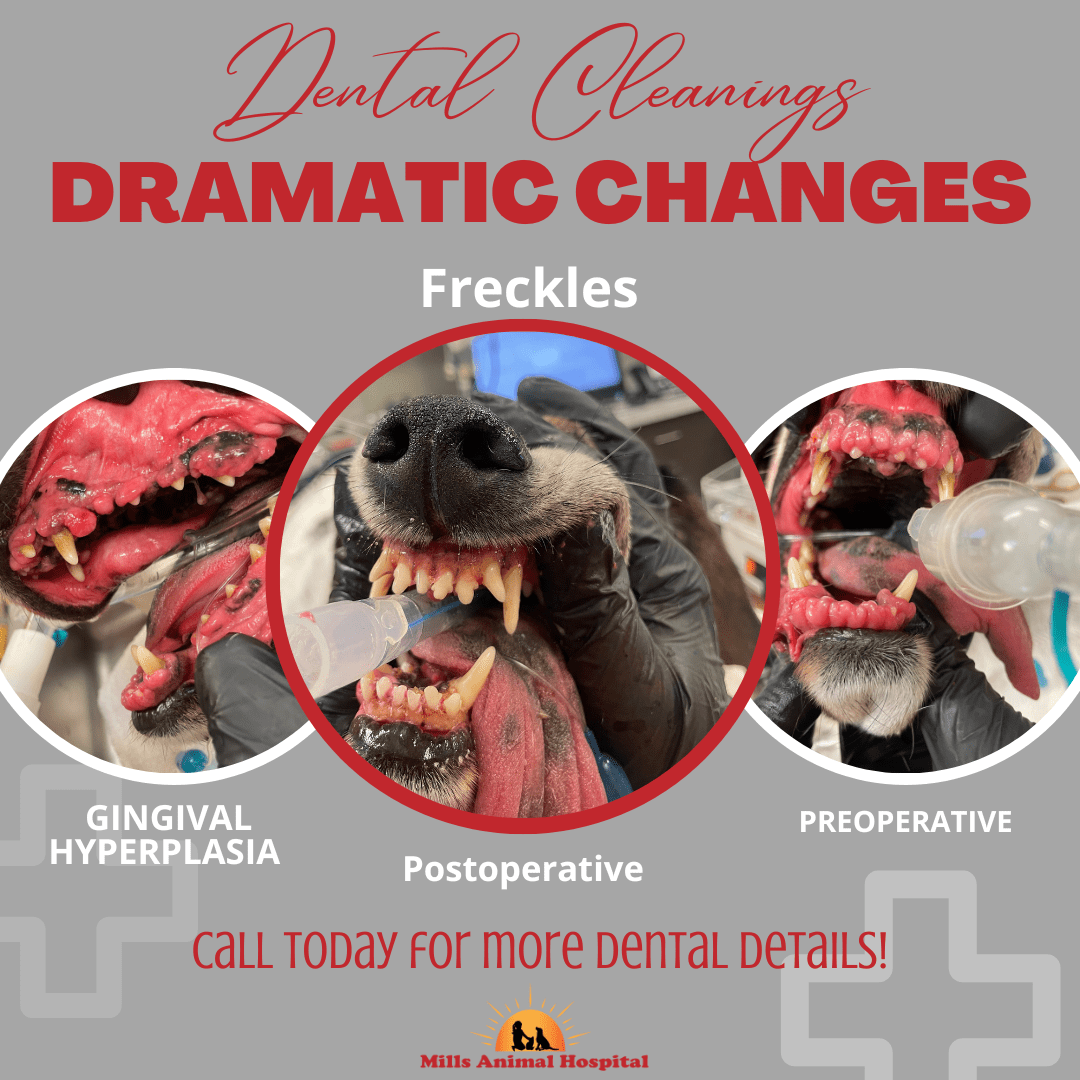
What Are Signs My Pet Needs a Dental Exam?
Dental disease can be easy to miss because many cats and dogs adapt to gradual changes in their mouths. Some pets show clear symptoms, while others have few noticeable signs until their dental disease becomes more advanced.
Schedule a dental evaluation if you notice:
- Persistent bad breath
- Yellow or brown tartar on the teeth
- Red, swollen, or bleeding gums
- Drooling more than usual
- Pawing or rubbing at the mouth
- Chewing on one side of the mouth
- Dropping food while eating
- Difficulty chewing hard food or treats
- Loose, broken, or discolored teeth
- Swelling around the mouth or face
- A sudden change in eating habits
What Should You Expect After Your Pet’s Dental Cleaning?

After the dental procedure, a veterinary team member monitors your pet closely as they wake from anesthesia. We keep them comfortable and assess their recovery before they return home.
Many pets are sleepy after anesthesia and gradually return to their regular routine. Recovery can vary depending on whether your pet had a routine cleaning or required extractions or other oral surgery.
Before your pet goes home, we will explain their aftercare instructions, including any temporary changes to feeding, activity, or oral care. If teeth were extracted, we will also explain what to expect while the mouth heals and when your pet should return for follow-up care.
Helping Protect Your Pet’s Teeth at Home
Professional dental cleanings address plaque, tartar, and disease that have already developed, while home dental care can help slow new buildup between veterinary visits.
Brushing is one of the most effective ways to remove plaque before it hardens into tartar. Use a toothbrush and toothpaste made specifically for pets, since human toothpaste should not be swallowed by cats or dogs.
If your pet is new to tooth brushing, introduce it gradually:
- Begin by getting your pet comfortable with having their lips, teeth, and gums touched.
- Introduce a pet toothbrush or finger brush without trying to clean the entire mouth right away.
- Let your pet become familiar with pet-safe toothpaste before brushing.
- Brush gently along the outer surfaces of the teeth and gumline.
- Keep sessions short and build a routine over time.
Veterinary-recommended dental diets, chews, wipes, rinses, or other oral-care products may also be useful for some pets. Ask our team which options make sense based on your pet’s dental health and lifestyle.
Call (770) 988-6698 or request an appointment online to schedule your cat or dog’s dental evaluation in Marietta.
Frequently Asked Questions About Cat & Dog Teeth Cleaning
Most cats and dogs benefit from having their teeth checked at every wellness exam, with professional dental cleanings recommended based on their age, breed, oral health, and level of plaque or tartar buildup. Some pets may need a professional cleaning annually, while others may need dental care more or less often. At Mills Animal Hospital, we examine your pet’s mouth during routine visits and let you know when a professional dental cleaning is the appropriate next step.
While anesthesia-free dental cleanings may remove some visible tartar, they do not allow for a complete oral examination or thorough cleaning below the gumline, where periodontal disease can develop. Professional dental cleanings are performed under anesthesia so pets remain safe, still, and comfortable while our veterinary team thoroughly evaluates and cleans the teeth, assesses the health of the gums and structures below the gumline, and addresses dental concerns that may not be visible during an awake examination.
Yes. Cats and dogs can develop plaque, tartar, gingivitis, periodontal disease, and other oral health concerns. Dental disease can lead to bad breath, inflamed or painful gums, infection, loose teeth, and discomfort, even when a pet continues to eat normally. Professional dental cleanings help remove plaque and tartar buildup and allow our team to identify dental problems that may not be obvious at home.
It depends on your individual pet insurance policy. Some wellness or preventive care plans may provide coverage or reimbursement for routine dental cleanings, while accident-and-illness policies may only cover dental treatment associated with an eligible injury or disease. Because coverage varies by provider and policy, we recommend contacting your insurance company directly before scheduling your pet’s dental procedure.