
Yes, a spay scar is normal on a dog after the surgical incision heals. A healthy scar usually appears as a thin, flat line on the lower abdomen.
After your dog comes home from her spay procedure, it is natural to check her belly and wonder whether the incision looks right. Knowing how a normal dog spay scar develops can help you distinguish routine healing from a possible complication. While some swelling and discoloration can occur early in recovery, the area should gradually become flatter, drier, and less irritated.
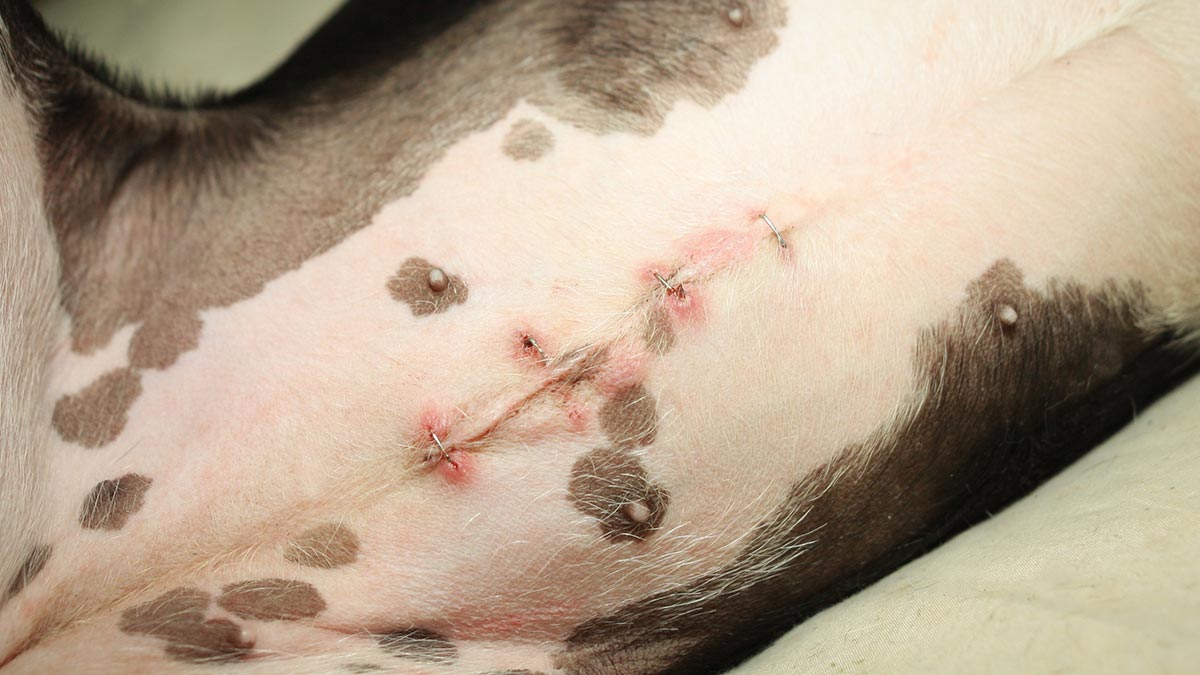
What Does a Spay Scar Look Like on a Dog?
A healed spay scar on a dog commonly looks like a narrow line that is slightly lighter, darker, or pinker than the surrounding skin. It may feel smooth and flat, or you may notice a small amount of firm tissue beneath the surface. During early recovery, you are looking at a healing incision rather than a mature scar. The edges should remain together, and the area should become drier and less irritated over time. Mild pinkness, slight swelling, and limited bruising can occur during the first few days, but these changes should steadily improve.
Normal features may include:
- A straight or gently curved closed line
- Mild pinkness during early healing
- Slight bruising that fades
- A thin scab or surgical adhesive
- A small, firm ridge beneath the skin
- Gradual hair regrowth
Where Is the Incision on a Spayed Dog?
For many dogs, the spay incision sits along the midline of the abdomen, below the belly button and above the vulva. Its exact position and length can vary based on the dog’s size, anatomy, surgical technique, and the veterinarian’s approach. A veterinarian may close the incision with buried absorbable sutures, external sutures, staples, surgical adhesive, or a combination of methods. When the sutures sit beneath the skin, you may not see stitches. The closure method can affect how the area looks and feels while it heals.
How Does a Dog Spay Scar Change During Healing?
A dog spay scar forms gradually as the body repairs each layer of tissue. Appearance alone cannot confirm that every internal layer has healed. The surface may look nearly normal before deeper tissues regain their strength. This is why activity restrictions remain important even when the skin looks better. Follow your veterinarian’s discharge instructions because recovery needs differ among patients.
What Should the Incision Look Like During the First Few Days?
During the first one to three days, the incision may look mildly pink or red at the edges. A small amount of swelling or bruising can also develop, particularly in dogs with pale skin. The edges should stay together without a widening gap, and any moisture should remain minimal. Your dog may seem tired after surgery and move more carefully than usual. Contact the veterinary team if the incision bleeds continuously, develops substantial swelling, or appears increasingly painful.
What Should It Look Like After One Week?
By approximately one week, the incision should generally look drier and flatter, with less redness and swelling. A light scab may remain, and the surrounding skin may still show fading bruises. Some dogs also become itchy as the tissues heal, which makes preventing licking especially important. Many dogs want to run, jump, or play before the incision can safely tolerate that movement. Continue the recommended restrictions until the veterinarian says your dog can return to normal activity.
What Should a Healed Dog Spay Scar Look Like?
Once the skin has healed, the incision line usually becomes flatter and less noticeable. The color may continue to fade for several weeks or months. A mature scar can remain slightly raised or firm without causing a problem. The area should remain closed, dry, and comfortable. The scar should not feel hot, continue growing, drain fluid, open, or cause ongoing discomfort. Any changing or painful area deserves a veterinary evaluation, even if the spay occurred months or years earlier.
Is a Lump Under a Dog Spay Scar Normal?
A small lump beneath a healing dog spay scar can sometimes result from inflammation, a buried suture knot, scar tissue, or a pocket of fluid called a seroma. Because several conditions can look similar, a veterinarian should assess any new or concerning swelling. Movement can contribute to fluid accumulation beneath the skin, especially when a dog becomes active too soon. A routine postoperative lump should not rapidly enlarge, become hot, produce discharge, or cause marked pain. Contact your veterinarian if the lump changes or your dog appears uncomfortable.
What Does an Abnormal Spay Scar or Incision Look Like?
A healing incision should trend toward less redness, swelling, and sensitivity. Changes that move in the opposite direction may indicate irritation, infection, fluid accumulation, a suture reaction, or separation of the wound. Comparing the incision with a photo taken the previous day may help you recognize gradual changes. However, a photograph cannot confirm what is happening beneath the skin. Early veterinary guidance can help keep a small problem from becoming more serious.
Contact your veterinarian promptly if you notice:
- Redness that spreads or intensifies
- Swelling that increases
- Yellow, green, white, or thick discharge
- A foul or unusual odor
- Continuous bleeding or fluid leakage
- Missing sutures, damaged staples, or open edges
- Heat, marked tenderness, or worsening pain
- Persistent licking or chewing
- Low energy, poor appetite, vomiting, or other concerning changes
An open incision, uncontrolled bleeding, collapse, pale gums, breathing difficulty, or severe weakness requires urgent veterinary attention. These symptoms may signal a serious surgical complication or another medical emergency. Do not wait for the area to improve on its own when your dog shows signs of significant illness. Contact an emergency veterinary hospital if your primary veterinarian is unavailable.
How Can You Protect a Healing Spay Incision?
Your dog’s surgical instructions should guide her recovery. Keep the incision dry, check it at least once or twice daily, and prevent licking or chewing with the protective device recommended by the veterinary team. Avoid putting cleaners, creams, ointments, or other products on the site unless your veterinarian directs you to do so. Too much activity can place tension on the incision and interfere with healing. Consistent supervision can help prevent licking, jumping, and other behaviors that may damage the surgical area.
Support healing by following these steps:
- Keep walks short and controlled
- Prevent running, jumping, and rough play
- Use the recommended cone or recovery garment
- Inspect the incision in good lighting
- Compare daily photos for changes
- Attend scheduled recheck visits
Activity restriction commonly lasts around 10 to 14 days, but your veterinarian may recommend a different timeline. Dogs with larger incisions, additional procedures, or healing concerns may need more time. Do not increase activity simply because your dog appears energetic. A skin incision can look closed before deeper tissues regain strength. Continue following the recovery plan until your veterinary team clears your dog for normal activity.
When Should You Contact Mills Animal Hospital in Marietta?
Call Mills Animal Hospital in Marietta at (770) 988-6698 whenever the appearance of your dog’s incision concerns you or the healing pattern changes unexpectedly. The veterinary team can determine whether you are seeing a normal spay scar on a dog, routine postoperative swelling, or a condition that needs an examination. A photo may provide context, but it cannot replace a hands-on assessment when the incision is opening, draining, painful, or worsening. Asking for guidance early can provide reassurance or help your dog receive timely care.
If your dog’s spay site does not look right, call (770) 988-6698 or book an appointment online so the team can evaluate her recovery and help you determine the next step.