
A normal spay incision on a dog should look clean, closed, and dry, with the skin edges touching. Mild pinkness, slight swelling, or light bruising may appear during the first few days, but each should gradually improve rather than become more noticeable.
The appearance of a dog spay incision varies based on skin tone, body size, closure method, and the number of days since surgery. Knowing what to expect can help you monitor recovery with greater confidence.
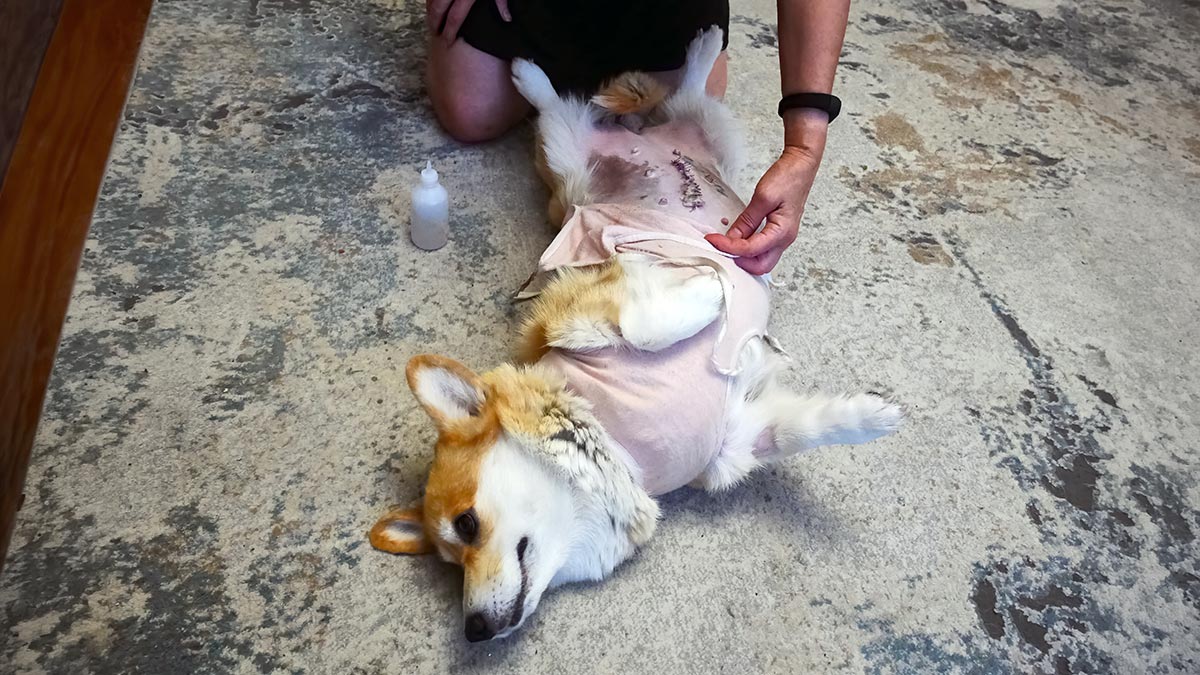
What Should a Normal Dog Spay Incision Look Like?
A typical spay incision sits along the middle of the abdomen, usually below the belly button. The veterinarian may close it with visible sutures or staples, or place dissolvable sutures beneath the skin. The edges should meet in a narrow line, and the area should remain free of active bleeding, thick discharge, moisture, or odor.
During the first few days, you may see:
- A thin pink or reddish line
- Mild puffiness around the closure
- Light red, purple, or yellow bruising
- A small amount of dried blood from surgery day
- Slight firmness beneath the skin
- Visible sutures, staples, or surgical adhesive
These findings may fit normal healing when they remain mild and improve. Take one clear photo each day for comparison, and avoid pressing or pulling the incision.
How Does a Dog Spay Incision Change During Healing?
The incision will change in color, texture, and firmness as tissues repair. Deeper abdominal layers need more time than the skin to regain strength, so continue all activity restrictions. Even when the incision looks significantly better, your dog’s body still needs time to complete the healing process.
What Should It Look Like During Days 1–3?
During the first 24 to 72 hours, the incision may appear slightly pink, raised, or bruised. Mild swelling can occur as the body begins its normal healing response. Dried blood may remain, but fresh bleeding should not continue, and the edges should stay together. Contact your veterinarian if redness, swelling, or discomfort increases quickly.
What Should It Look Like During Days 4–7?
By the middle of the first week, redness and swelling should decrease. Bruising may turn yellow as it fades, and a small scab or firm ridge may form. Continue preventing running, jumping, rough play, and unrestricted stair use. Your dog may feel ready for normal activity before the incision can safely handle it.
What Should It Look Like During Days 8–14?
During the second week, a normal dog spay incision often looks flatter and lighter. It may remain pink, but it should stay dry and stable while bruising and tenderness fade. Many dogs need about 10 to 14 days of protected recovery, although your veterinarian will decide when regular activity can resume. Continue checking the incision until the veterinary team confirms that it has healed properly.
How Long Does a Dog Spay Incision Take to Heal?
Most uncomplicated skin incisions heal enough for a recheck or removal of external sutures within about 10 to 14 days. Deeper abdominal tissues continue rebuilding strength after the surface looks closed. Health, body condition, incision size, and activity can affect the timeline. Licking, chewing, or excessive movement may delay healing.
Follow your dog’s discharge instructions throughout recovery. Keep the incision dry, use the protective device recommended by the veterinary team, and allow only controlled activity until the clinic clears her. Avoid bathing and swimming during healing. Check the incision daily and call (770) 988-6698 when changes worsen.
Is a Dog Spay Incision Lump Normal?
A small, firm lump beneath a dog spay incision can occur during normal healing. New tissue, buried sutures, or a small pocket of fluid may create a ridge or bump under the skin. The lump should remain small and gradually improve rather than rapidly enlarge. A veterinarian should assess a lump that grows, feels hot, hurts, or appears with redness or discharge.
When Does a Lump Need Veterinary Attention?
Call Mills Animal Hospital Marietta when a lump increases in size, appears suddenly, or causes the skin to look tight and shiny. The team should also assess swelling that spreads beyond the incision or becomes increasingly painful. Heat, drainage, odor, or a bulge that changes when your dog stands or moves may signal a problem. A photo can help the team review the change, but your dog may still need an examination.
What Should You Do if Your Dog’s Spay Incision Is Slightly Open?
A small gap needs veterinary attention because the team must determine whether the surface or a deeper layer has separated. Do not pull the edges together, apply household products, tightly cover the site, or let your dog lick it. Restrict activity, keep the area dry, and contact Mills Animal Hospital Marietta for guidance. The veterinarian may ask when it appeared and whether bleeding or drainage is present.
Seek urgent care for a widening opening, visible tissue, ongoing bleeding, or fluid that continues to drain. Severe swelling, marked pain, weakness, pale gums, collapse, or tissue protruding from the incision requires immediate emergency care. Movement and abdominal pressure can quickly worsen an opening. Protect the site from licking while arranging evaluation.
How Can You Tell if a Dog Spay Incision Is Infected?
An infected incision usually becomes more inflamed instead of steadily calming down. Redness may spread, swelling may increase, and the skin may feel warmer than nearby tissue. Thick yellow, green, white, or bloody discharge may appear, sometimes with an unpleasant odor. Your dog may become more uncomfortable, repeatedly turn toward the incision, lose interest in food, or seem unusually tired.
Contact the veterinary team if you notice:
- Redness or swelling that keeps increasing
- New bleeding or cloudy discharge
- Heat, marked tenderness, or worsening pain
- Missing sutures or staples
- Persistent licking despite protection
- A gap between the skin edges
- Low energy, poor appetite, vomiting, or collapse
These signs need professional assessment, even though they do not always confirm infection. A veterinary examination can distinguish expected inflammation from a developing complication.
How Do You Know if Your Dog’s Spay Incision Is Healed?
A healed incision looks closed, dry, and stable, with no drainage, spreading redness, or increasing swelling. A thin pink line or small firm ridge may remain after recovery. Your dog should move comfortably and show little interest in licking the area. Visible sutures or staples may still require removal, so wait for veterinary clearance before resuming unrestricted exercise, bathing, swimming, or rough play.
The surface may look healed before the deeper abdominal tissues regain full strength. A dog can feel energetic several days after surgery while internal repair continues. Jumping or rough play can strain them, so follow the full restriction period and attend any recommended recheck. Your veterinarian can evaluate healing more accurately than appearance alone.
When Should You Contact Mills Animal Hospital Marietta?
Call Mills Animal Hospital Marietta whenever the incision looks worse from one day to the next or you feel unsure about a change. The team can help determine whether your dog needs routine monitoring, a scheduled recheck, or urgent care. Mills Animal Hospital Marietta provides surgical care for dogs and cats in Marietta, GA, using dedicated surgical suites and Elizabethan collars (E-collars) when appropriate to help protect the incision during recovery.
For questions about a normal spay incision on a dog, concerns during recovery, E-collar use, or help planning your dog’s procedure, call (770) 988-6698 or book an appointment online with Mills Animal Hospital Marietta.