
Most dogs need to wear their cone for 10 to 14 days after neuter surgery, or until the incision has fully closed and the veterinarian approves removal. Keep it on longer if your dog still tries to lick the area, the incision looks irritated, or healing takes more time than expected.
The cone may seem unnecessary once your dog starts acting normal again. However, energy often returns before the skin and deeper tissues finish healing. A few seconds of licking or chewing can irritate the incision, introduce bacteria, remove surgical material, or reopen the wound. Your dog’s discharge instructions should always take precedence because procedures and recovery needs vary.
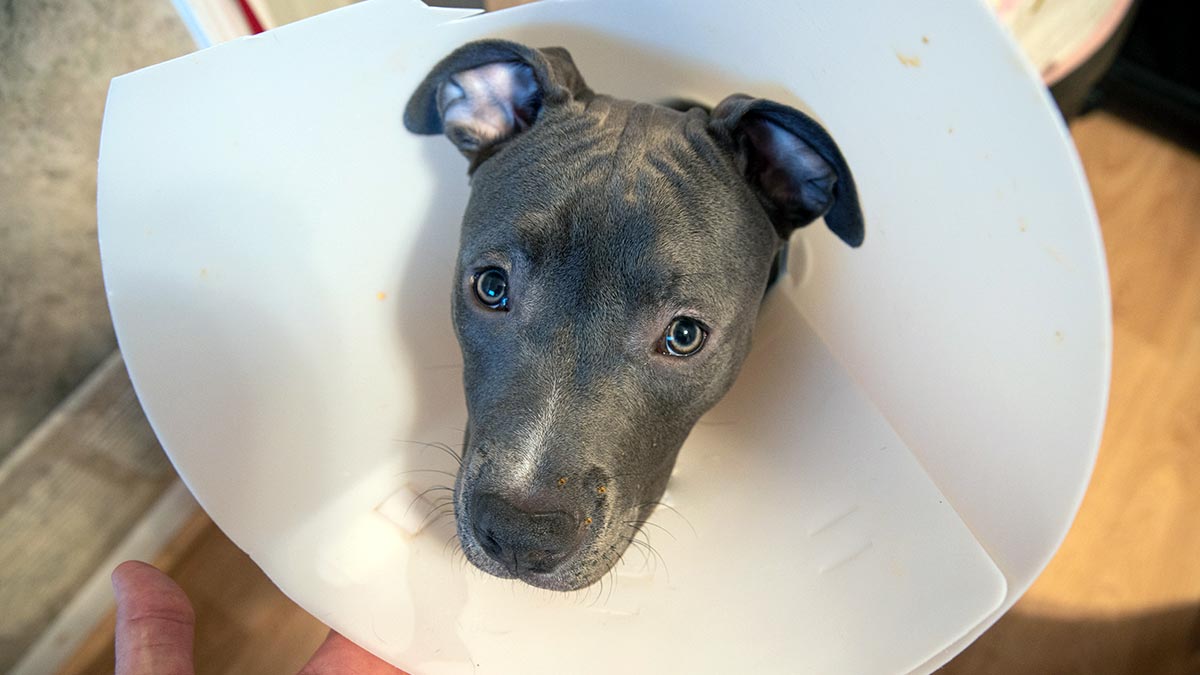
When to Take the Cone Off a Dog After Neuter Surgery
You can usually remove the cone when the recommended recovery period has passed and the incision looks completely healed. For many routine neuter procedures, that means waiting about 10 to 14 days. The incision should remain closed, dry, and free from concerning changes. Your veterinarian may recommend keeping the cone on until a scheduled recheck.
Before removing the cone, check that:
- The incision edges have closed completely
- The skin looks dry and calm
- Swelling has resolved or continued to improve
- No discharge, bleeding, odor, or open area appears
- Your dog shows little interest in licking
- Your veterinary team has not provided a longer timeline
Scabbing alone does not prove that the skin underneath has healed. A small external incision may also involve tissue that is still repairing below the surface. Your dog may immediately begin licking once you remove the barrier. When deciding when to take the cone off a dog, follow the specific instructions from the veterinarian who performed the surgery.
Why Does a Dog Need a Cone After Neuter Surgery?
The cone creates a physical barrier between your dog’s mouth and the surgical site. Dogs often lick areas that feel itchy, tender, unusual, or damp, and healing incisions can create those sensations. Licking adds moisture, friction, and bacteria that may interfere with healing. Even occasional licking can keep the incision irritated.
Chewing can cause greater damage. A dog may loosen sutures, disturb surgical glue, pull at a scab, or create an opening in the incision. These problems can lead to pain, inflammation, infection, or another procedure. Keeping the area covered helps prevent an avoidable setback.
Can the Cone Come Off While My Dog Eats or Sleeps?
Many dogs can eat, drink, rest, and sleep while wearing a correctly fitted cone. The cone should extend beyond your dog’s nose and remain secure enough that he cannot back out of it or bend around the edge. Adjusting the position or height of food and water bowls may make mealtimes easier. Contact your veterinary team if your dog cannot eat or drink comfortably.
Remove the cone briefly only if your veterinary team has approved supervised breaks. Keep your full attention on your dog and replace the cone immediately if he turns toward the incision. Incision damage can happen quickly. The cone should remain on while your dog sleeps or stays home without direct supervision.
How Long Is Neuter Recovery for a Dog?
Most dogs need about 10 to 14 days of restricted activity after a routine neuter. Your dog may seem tired, quiet, or less interested in food on the first evening, then show more energy over the next few days. That increased energy does not mean the surgical area has finished healing. Continue following the activity restrictions for the entire recommended period.
Prevent running, jumping, rough play, wrestling, and off-leash activity unless your veterinarian says otherwise. Take your dog outside on a leash for bathroom breaks and keep interactions with other pets calm. Too much movement can increase swelling, cause bleeding, place tension on the incision, or slow tissue repair. Dogs with retained testicles may need a longer recovery because surgery can involve the abdomen or groin.
What Should a Healing Neuter Incision Look Like?
A normal incision should remain closed, dry, and relatively flat. Mild redness, light bruising, or limited swelling may appear early, but these changes should gradually improve. The area should not develop thick discharge, a strong odor, active bleeding, or a widening gap. Changes that become more noticeable rather than less noticeable warrant a call to your veterinarian.
Check the incision once or twice daily without touching or pressing it. Look for changes in swelling, color, moisture, and the position of the incision edges. Keep your dog from licking while you examine the area. Contact Mills Animal Hospital if the incision looks worse from one day to the next.
What Happens When You Neuter a Dog?
During a routine neuter, the veterinarian removes both testicles while the dog remains under anesthesia. The procedure prevents reproduction and eliminates the risk of testicular cancer. Veterinary teams monitor the dog throughout anesthesia and recovery. Mills Animal Hospital in Marietta provides surgical patients with an IV catheter and fluids before, during, and after their procedure.
The veterinarian usually makes a small incision near the scrotum and closes the area using the method selected for that dog. Some closure materials sit beneath the skin and dissolve, while others may require removal. Dogs with one or both testicles retained inside the abdomen or groin need a different surgical approach. Their incision placement, cone timeline, and recovery plan may differ from a routine neuter.
What Dog Neutering Side Effects Are Normal?
Mild, short-lived changes can occur after anesthesia and surgery. Your dog may sleep more, move slowly, seem less coordinated, or eat less than usual during the first evening. Mild bruising or swelling around the surgical area can also occur during the first few days. These changes should gradually decrease rather than become more noticeable.
Call your veterinarian if your dog does not improve as expected, discomfort appears significant, or a new symptom develops. Follow the feeding, activity, and monitoring directions included in your dog’s discharge instructions. Avoid comparing your dog’s recovery with another pet’s experience because surgical details can differ. Your veterinary team can assess symptoms in the context of your dog’s procedure and health history.
When Should I Call the Veterinarian After a Neuter?
Contact a veterinarian promptly if you notice:
- An incision that opens or develops a gap
- Persistent or active bleeding
- Increasing redness, heat, or swelling
- Yellow, green, bloody, or foul-smelling discharge
- Repeated vomiting or diarrhea
- Extreme weakness, collapse, or difficulty breathing
- Pale gums or a swollen abdomen
- Trouble urinating
- Refusal to eat beyond the discharge instructions
- Persistent licking despite a cone
- Sudden pain, crying, trembling, or unusual aggression
Keep the incision protected while you contact the veterinary team. Do not allow your dog to lick the area while you wait for guidance. If your dog reaches the incision, damages the closure, or removes surgical material, call even when the area initially looks minor. Early assessment may prevent the problem from becoming more difficult to treat.
When to Take the Cone Off a Dog After Surgery in General
The correct timeline depends on the surgery and wound location. A routine neuter may require 10 to 14 days, while orthopedic, abdominal, eye, wound-repair, or mass-removal procedures may require longer. Keep the cone on until the surgical site has healed and the veterinarian confirms that licking or chewing can no longer cause harm. Never apply the timeline from one procedure to an unrelated surgery.
Do not assume that a soft collar, inflatable collar, or recovery garment offers equal protection. Some dogs can bend around these products and reach the groin or lower abdomen. Any device must prevent access to the entire incision while allowing your dog to breathe, swallow, and move safely. Ask the veterinary team to check the fit if your dog can reach the area or cannot comfortably eat and drink.
Ask Mills Animal Hospital About Your Dog’s Neuter Recovery
When you are unsure when to take the cone off a dog after neuter surgery, the safest answer comes from the team that knows how the procedure went and how the incision was closed. Mills Animal Hospital in Marietta, GA provides routine spay and neuter services for dogs and cats using dedicated surgical suites and appropriate post-operative care, including Elizabethan collars (E-collars) to help protect the incision during healing. Each patient receives care based on their health and surgical needs.
Our team can assess healing, address changes at the surgical site, and explain when your dog can safely return to normal activity. Call (770) 988-6698 or book an appointment online if you have questions about your dog’s incision, E-collar fit, recovery progress, or behavior. Contact the hospital sooner if your dog reaches the incision or develops concerning symptoms. Keep the E-collar in place until the veterinary team advises you to remove it. Following the full recovery plan gives the incision time to heal securely.